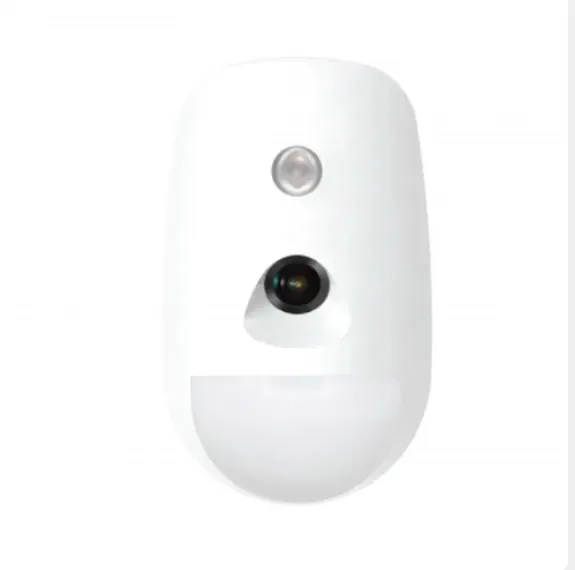


When planning security for a home, office, shop or other property, two of the most common options are an alarm system and CCTV.
At first glance, both may appear to serve the same purpose. In reality, however, they work differently and solve different problems.
An alarm system is primarily designed to detect a defined event and generate an alert. CCTV, on the other hand, provides visual information about what is happening in a monitored area.
For this reason, the right question is often not “which one is better?” but “what does this particular property actually need?”
1. What is an alarm system?
An alarm system uses different sensors and devices to monitor defined events.
Depending on the installation, it may include:
- motion detectors;
- magnetic contacts for doors and windows;
- glass-break sensors;
- sirens;
- keypads or other control devices;
- communication modules;
- additional sensors according to the property.
When the system is armed and an event is detected, it may activate a local alarm or send a notification depending on how it is configured.
Its main purpose is event detection and response.
2. What is CCTV?
CCTV uses cameras to monitor selected areas.
A system may include:
- indoor cameras;
- outdoor cameras;
- a recording device;
- network connectivity;
- a monitor;
- remote access;
- storage devices.
Its main purpose is to provide visual information and, when correctly configured, recordings of events.
This makes it possible to see what is happening live or review what happened earlier.
3. The basic difference: alert versus image
The easiest way to explain the difference is:
An alarm system tells you that something is happening.
CCTV shows you what is happening.
For example, a motion detector may detect movement in a room and trigger an alarm.
A camera covering the same area may help show what caused that movement.
This is why the two systems often complement each other very well.
4. When an alarm system is more important
An alarm system is particularly useful when the priority is automatic response to a defined security event.
This may be important for:
- homes;
- shops;
- warehouses;
- offices;
- workshops;
- properties left unattended at night.
A well-planned alarm system can protect entrances, rooms and other critical points.
5. When CCTV is more useful
Cameras are especially valuable where visual control is important.
Examples include:
- property entrances;
- parking areas;
- gardens and yards;
- retail areas;
- warehouse zones;
- entrances and exits;
- shared spaces.
CCTV allows a specific situation to be reviewed and helps determine what actually happened.
6. A camera is not the same as an alarm system
This is an important distinction.
Having cameras does not automatically mean that the property has a complete intrusion detection system.
Cameras can provide visual information, but their primary role is different from that of a dedicated alarm system using security sensors.
Where immediate detection of a defined event is the priority, an alarm system usually plays the key role.
7. An alarm system does not provide the full visual picture
The reverse is also true.
An alarm system may indicate that a particular sensor or zone has been activated, but it does not always show exactly what is happening there.
A camera can provide additional context.
For example, if an outdoor zone is triggered, CCTV may help determine whether the event was caused by a person, an animal or something else.
8. Combining both systems is often the best solution
For many properties, the most practical approach is to use CCTV and an alarm system together.
This can provide:
- automatic event detection;
- local or remote alerts;
- visual verification;
- recording capability;
- better control of critical areas.
This does not mean that every property necessarily needs both systems.
However, where security requirements are higher, the combination is often a logical choice.
9. Outdoor cameras must be selected correctly
A camera that works well indoors is not automatically suitable for outdoor use.
Outdoor CCTV planning should consider:
- weather conditions;
- lighting;
- night-time performance;
- viewing angle;
- installation position;
- possible glare from lights;
- physical access to the camera.
Correct positioning is often just as important as the camera itself.
10. Image quality is not only about resolution
When selecting CCTV, megapixel count often receives the most attention.
It is only one factor.
Other important elements include:
- sensor quality;
- low-light performance;
- lens selection;
- compression;
- lighting in the monitored area;
- correct installation.
A high-resolution camera installed in the wrong position may provide less useful information than a properly selected and positioned system.
11. Recording should be planned in advance
With CCTV, it is important to consider how long recordings should be retained.
This depends on:
- the number of cameras;
- resolution;
- recording mode;
- storage capacity;
- how the system will be used.
Some systems record continuously, while others record when movement is detected or according to a schedule.
This should be considered during the design stage.
12. Wired or wireless solution
Both alarm systems and CCTV can be available in wired and wireless configurations.
In new construction or major renovation work, installing the necessary cables in advance often makes sense.
This can provide:
- a cleaner installation;
- fewer visible cables;
- stable power and communication;
- easier future expansion.
In finished properties, wireless solutions can sometimes be a convenient alternative.
13. Remote access is useful but must be configured properly
Many modern systems allow monitoring or control from a smartphone.
Depending on the equipment, this may include:
- viewing cameras;
- receiving notifications;
- arming or disarming the alarm;
- checking system status.
These features are convenient but should be configured carefully with appropriate access protection.
14. Security planning should begin with the risk points
The best system is not necessarily the one with the largest number of devices.
It is the one that is correctly planned.
During an inspection, it is useful to identify:
- main entrances;
- easily accessible windows;
- areas with limited visibility;
- gardens and parking areas;
- important rooms;
- areas that need recording;
- areas requiring automatic detection.
Only then should the number and type of devices be determined.
15. Which should you choose?
If your main priority is for the system to react automatically to intrusion or another defined event, an alarm system is the more important component.
If your main goal is to see and record what is happening, CCTV is the more suitable solution.
If you want a more complete security setup, combining the two systems often makes sense.
There is no single configuration that is ideal for every property.
Classic EL installs alarm systems, CCTV and access control solutions for different types of properties and can assist with system selection, wiring and installation.
Classic EL – security starts with a properly planned system.
Alarm System or CCTV: What Is the Difference and Which Should You Choose?