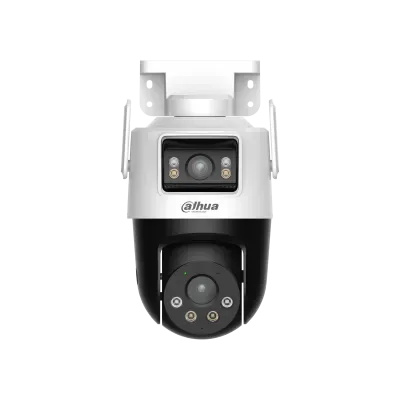


CCTV is no longer used only in shops, offices and large commercial properties. More homeowners are installing cameras around houses, apartments, garages and gardens for greater control and peace of mind.
A properly designed system can help monitor entrances, parking spaces, gardens, garages and other important areas. However, simply buying cameras is not enough. To make the system genuinely useful, it should be planned carefully before installation.
1. Decide what you actually need to monitor
The first step is not choosing a camera. It is identifying the areas that matter.
Consider locations such as:
- the main entrance;
- garden or yard;
- garage;
- parking space;
- basement entrance;
- terrace;
- side entrance;
- shared areas around the property.
Once the required coverage is clear, it becomes much easier to determine the number and type of cameras.
2. Do not install cameras simply where there is available space
Camera position is one of the most important parts of the system.
A camera mounted too high may cover a large area but provide insufficient useful detail.
A camera mounted too low may be easier to reach or damage.
The installation should balance:
- overall coverage;
- useful detail;
- physical security;
- lighting conditions;
- viewing angle.
3. A wider angle is not always better
A wide-angle camera can cover more of an area, but objects within the image may appear smaller.
If the goal is to monitor a specific door, gate or entrance, a narrower, well-directed view may be more useful.
For large gardens, several correctly positioned cameras may provide better results than a single camera trying to cover everything.
4. Night vision should be planned for real conditions
Many cameras use infrared illumination, but real night-time performance depends on the environment.
The image may be affected by:
- outdoor lights;
- vehicle headlights;
- reflections;
- nearby walls;
- vegetation;
- high-contrast areas.
The camera should therefore be selected and positioned according to the actual installation environment.
5. Do not look only at megapixels
Resolution matters, but it is not the only factor affecting image quality.
Other important factors include:
- sensor quality;
- lens;
- dynamic range;
- low-light performance;
- compression;
- correct configuration.
A higher megapixel number alone does not guarantee a more useful recording.
6. Outdoor cameras must be designed for outdoor use
Outdoor cameras are exposed to:
- rain;
- dust;
- moisture;
- temperature changes;
- strong sunlight.
Equipment should therefore be suitable for exterior installation.
Cable connections and joints also need proper protection.
7. Wired systems are often the most reliable option
During new construction or major renovation work, installing CCTV cabling in advance is a very good idea.
It can provide:
- a cleaner installation;
- fewer visible cables;
- a more stable connection;
- easier maintenance;
- better preparation for future expansion.
Wireless solutions can be convenient, but they depend on network quality and available power.
8. IP or analogue CCTV
Both types of systems are still used.
IP cameras work through network infrastructure and can offer extensive configuration and expansion options.
Modern analogue systems can also provide high-resolution video and may be suitable for certain installations.
The best option depends on:
- existing cabling;
- size of the property;
- budget;
- required features;
- future expansion plans.
9. The recorder is just as important as the cameras
Cameras provide the image, but if you need an archive, appropriate recording equipment is required.
The design should consider:
- number of cameras;
- recording resolution;
- required retention period;
- continuous or motion-based recording;
- necessary storage capacity.
Insufficient storage can result in a much shorter archive than expected.
10. Remote access should be configured securely
Smartphone access is one of the most useful features of modern CCTV systems.
You can check cameras while away from home, but access security is important.
Good practice includes:
- strong passwords;
- up-to-date equipment;
- protected user accounts;
- only the permissions that are actually required.
Factory-default or simple passwords should not be left in use.
11. Motion recording can save storage, but needs correct configuration
Many systems can record when movement is detected.
This may reduce storage requirements, but poor configuration can generate unnecessary events.
For example:
- moving branches;
- shadows;
- animals;
- vehicle headlights;
- rain or snow
may cause detections in some configurations.
Sensitivity and detection areas should therefore be adjusted for the location.
12. Avoid blind spots
A properly designed CCTV system should provide logical coverage.
Critical areas should not contain easy routes where someone can pass without appearing in a useful camera view.
In some installations, one camera can also cover the area around another camera, providing additional system protection.
13. Plan the location of the recording equipment
The recorder should not necessarily be installed in the most obvious location.
A home CCTV system can include a protected area for:
- DVR/NVR equipment;
- network hardware;
- power supplies;
- UPS equipment where required.
This creates a cleaner and better protected installation.
14. Power supply matters too
A CCTV system cannot provide much protection if it stops working during a brief power interruption.
For some properties, backup power for the main equipment may be worth considering.
This should be selected according to the size and purpose of the system.
15. Be careful about what your cameras capture
Cameras should be directed toward the areas that actually need protection.
Privacy and applicable rules should also be considered during installation, particularly where public areas or neighbouring properties may appear in the image.
Correct camera positioning can improve security while reducing unnecessary surveillance.
16. A very cheap camera can become an expensive choice
Extremely low-cost equipment may involve compromises such as:
- poor night-time image quality;
- unreliable mobile applications;
- low-quality housings;
- short service life;
- limited support;
- difficult integration with other equipment.
For a system expected to operate continuously, reliability matters.
Where should you start?
The best approach is to identify what the system must protect before choosing the equipment.
A good home CCTV system should provide useful images where they are needed, record reliably and remain easy to use.
Classic EL can assist with inspection, planning, cabling, installation and configuration of a CCTV system according to the specific property.
Classic EL – see what matters, when it matters.
Home CCTV: What You Should Know Before Installation?